Case Study · Fidelity Investments
Fidelity's Workplace Innovation team needed something memorable for their annual summit that would actually change how people worked when they got back to their desks.
The Problem
Every year, Fidelity's Workplace Innovation team gathered their people for a summit — executives, designers, and project managers all in one room. And every year, the format was the same: a presentation and a group worksheet.
The ask was vague but exciting: do something fun and interesting. The real challenge underneath that? How do you hold the attention of 180 people while actually instilling values and behaviors that stick beyond the event?
Before
After
My Role
Working under a Creative Director, I executed the experience design within the Fidelity brand system. That meant taking the creative direction and translating it into every asset, every mechanic, and every player interaction.
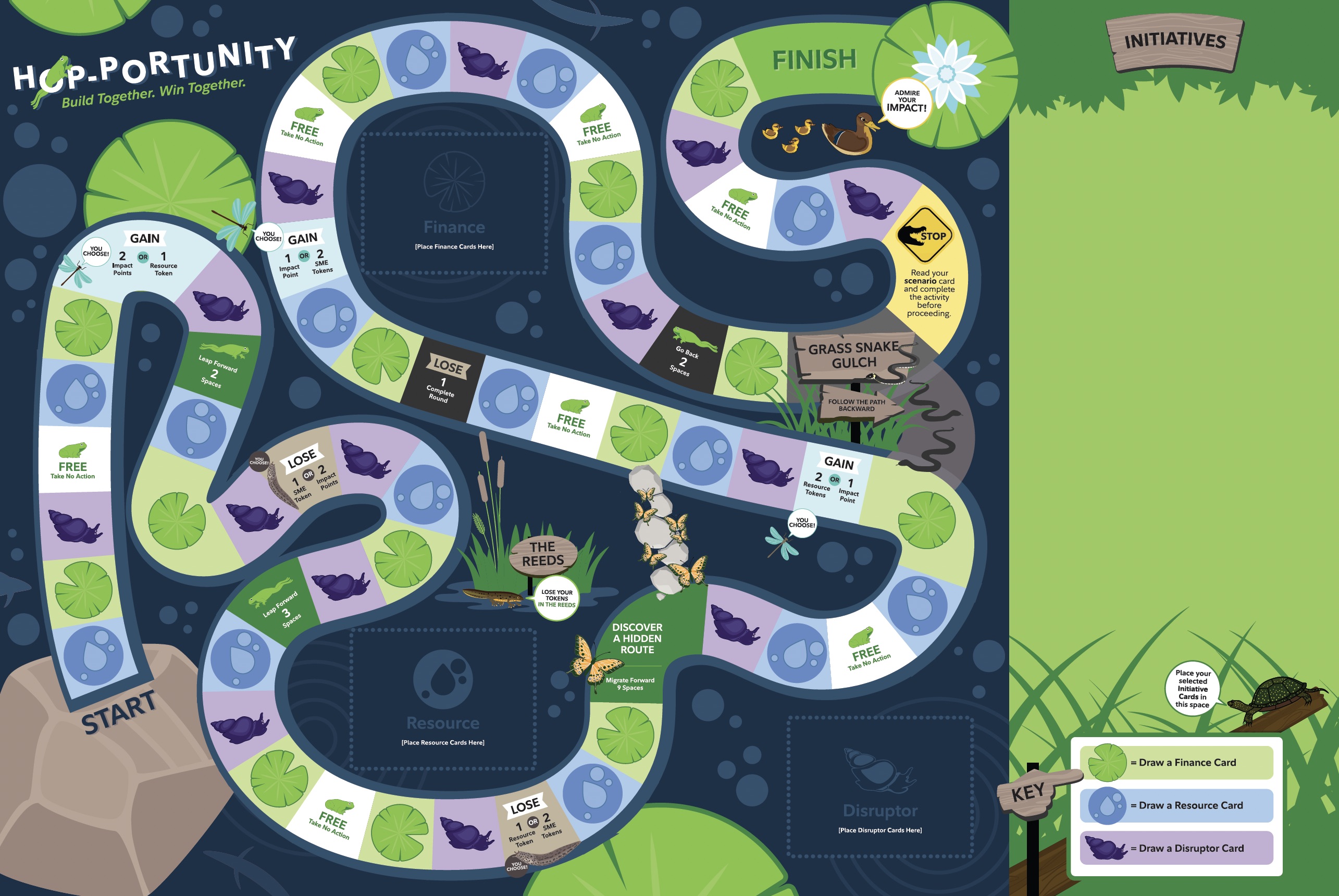
I built the game around Fidelity's existing frog metaphor, creating Hop-Portunity — a swamp-themed cooperative experience where teams fund and advance Initiatives across a game board, navigating financial decisions, resource constraints, and disruptors along the way. Players earn Impact Points by completing Initiatives and demonstrating collaboration behaviors like focus, delivery, and cross-table coordination.
The full asset suite included:
One of the most meaningful parts of this work was knowing when to push back on content. Getting to clarity in a game experience means making hard editorial calls, and I worked directly with stakeholders to cut what wasn't serving the gameplay. That tension between richness and playability is where the real design thinking happened.
Before the live event, I ran three rounds of pilot testing — building prototype boards and playing through them with real clients to pressure-test the mechanics and refine the experience. Each round shaped the final product in a meaningful way. It was my first time facilitating client workshops independently, and it changed how I think about iteration and feedback.
On the day of the event, I was on-site for all 180 participants to ensure the experience ran seamlessly from setup to final scoring.
Process
Worked with the Fidelity team to understand the values and behaviors they wanted to instill. Translated dense content into game mechanics that could live on cards and spaces.
Made intentional design choices at every level — board size, number of spaces, card types (Finance, Resource, Disruptor), scoring system, frog character system. Every decision tied back to the experience goal.
Built the entire visual world in Illustrator — board, cards, game pieces, scoreboard, rulebook, box. Leaned into the Fidelity frog brand metaphor to create a cohesive, lovable aesthetic.
Facilitated a full pilot workshop before the live event — my first time running a client workshop in that capacity. Used feedback to refine mechanics and timing before the 180-person event.
Ran the game simultaneously across all tables for 180 participants — executives, designers, and PMs playing together in real time.
The Work
Every asset was designed and illustrated in Illustrator — from the board to the box to the live scoreboard screen.
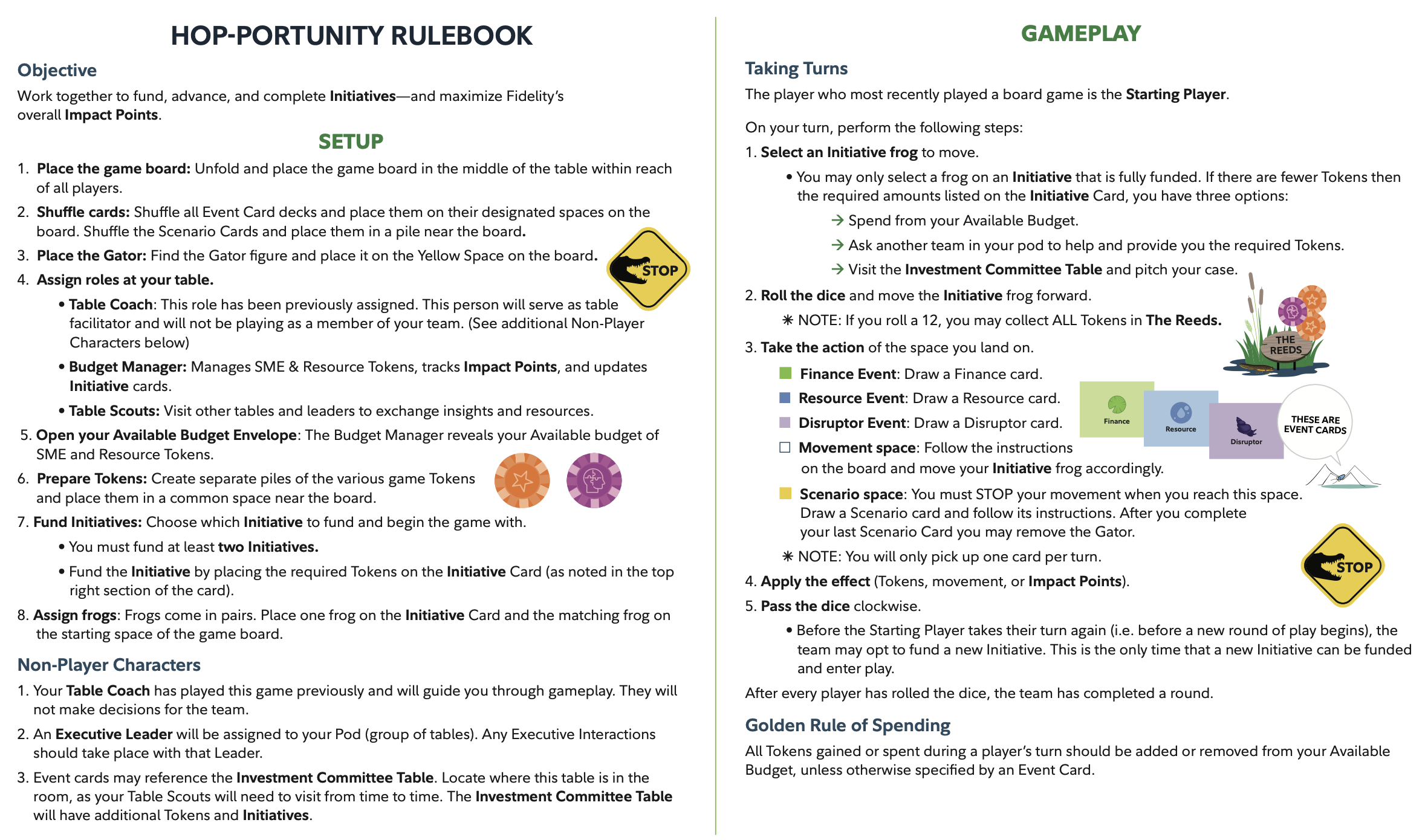
Rulebook and gameplay instructions
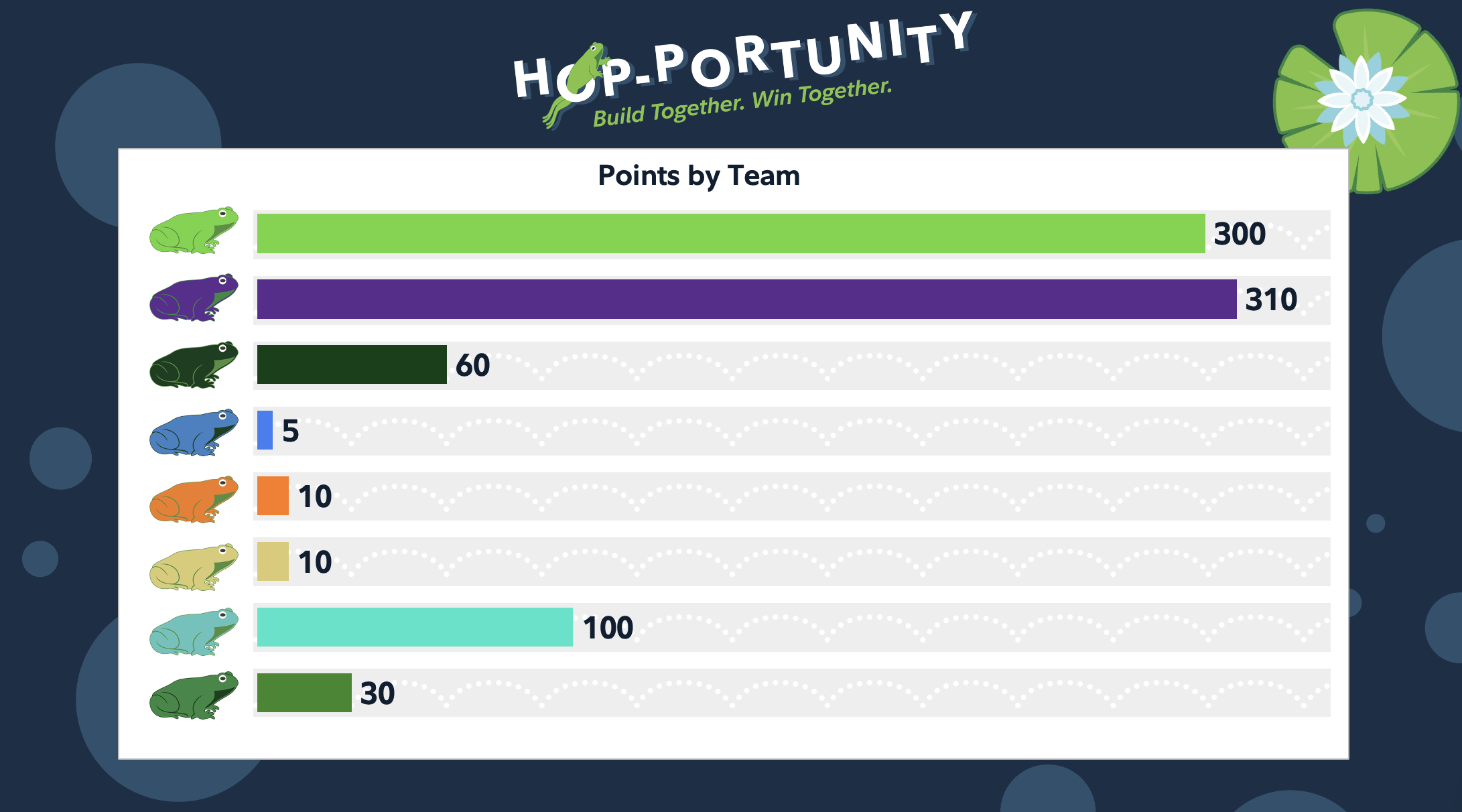
Live points-by-team scoreboard
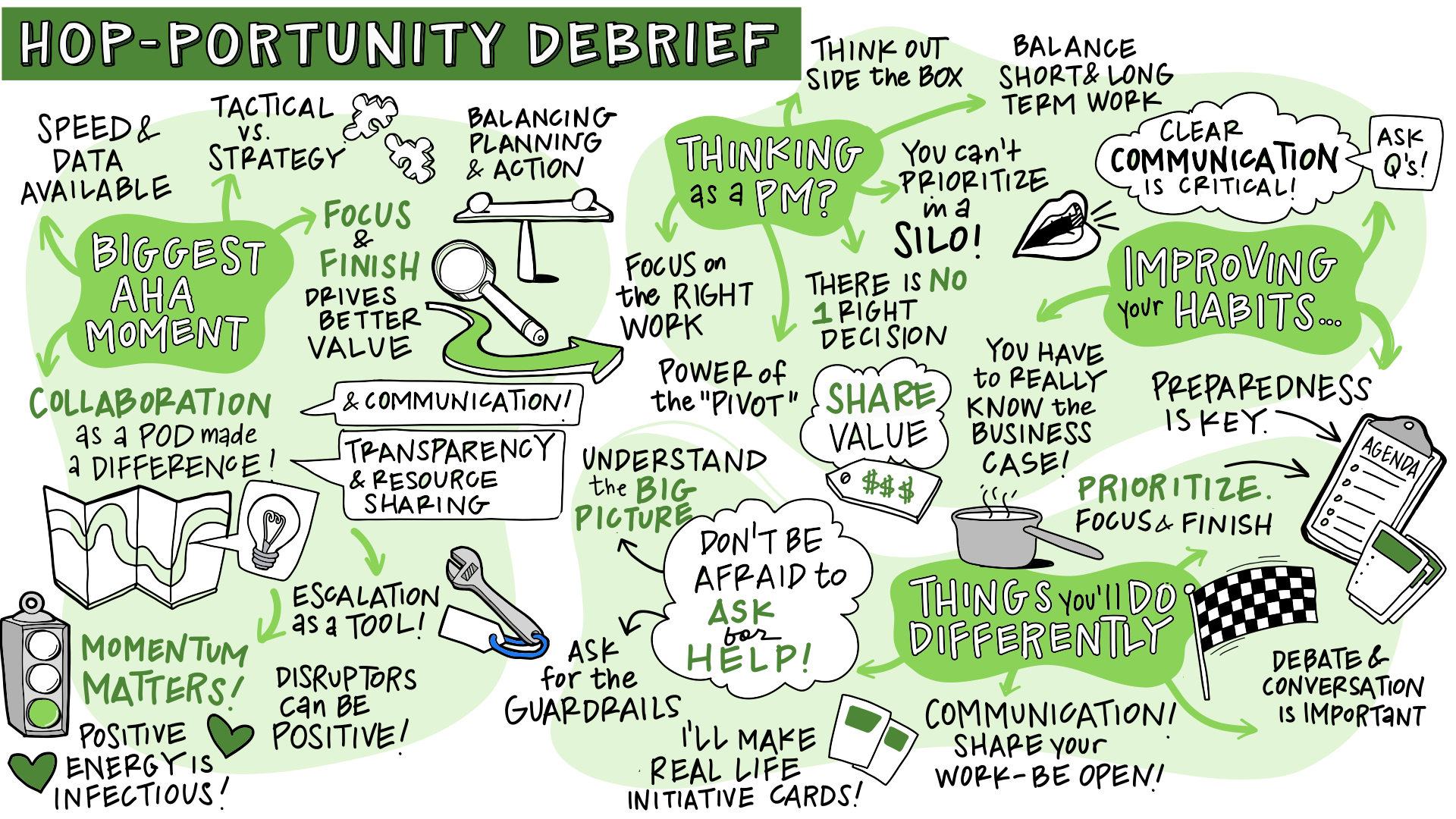
Debrief conversation and synthesis
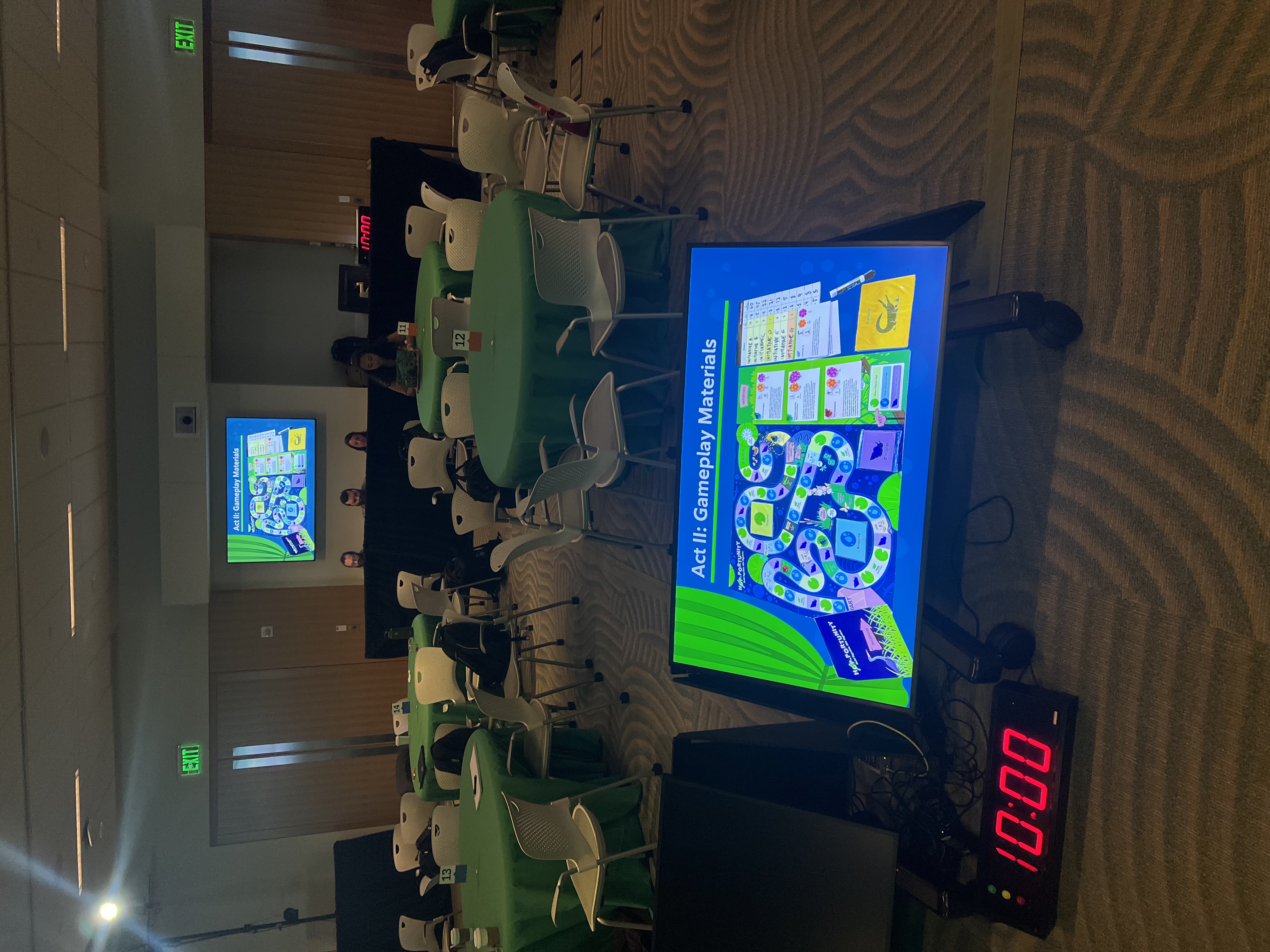
Event room setup before the session began
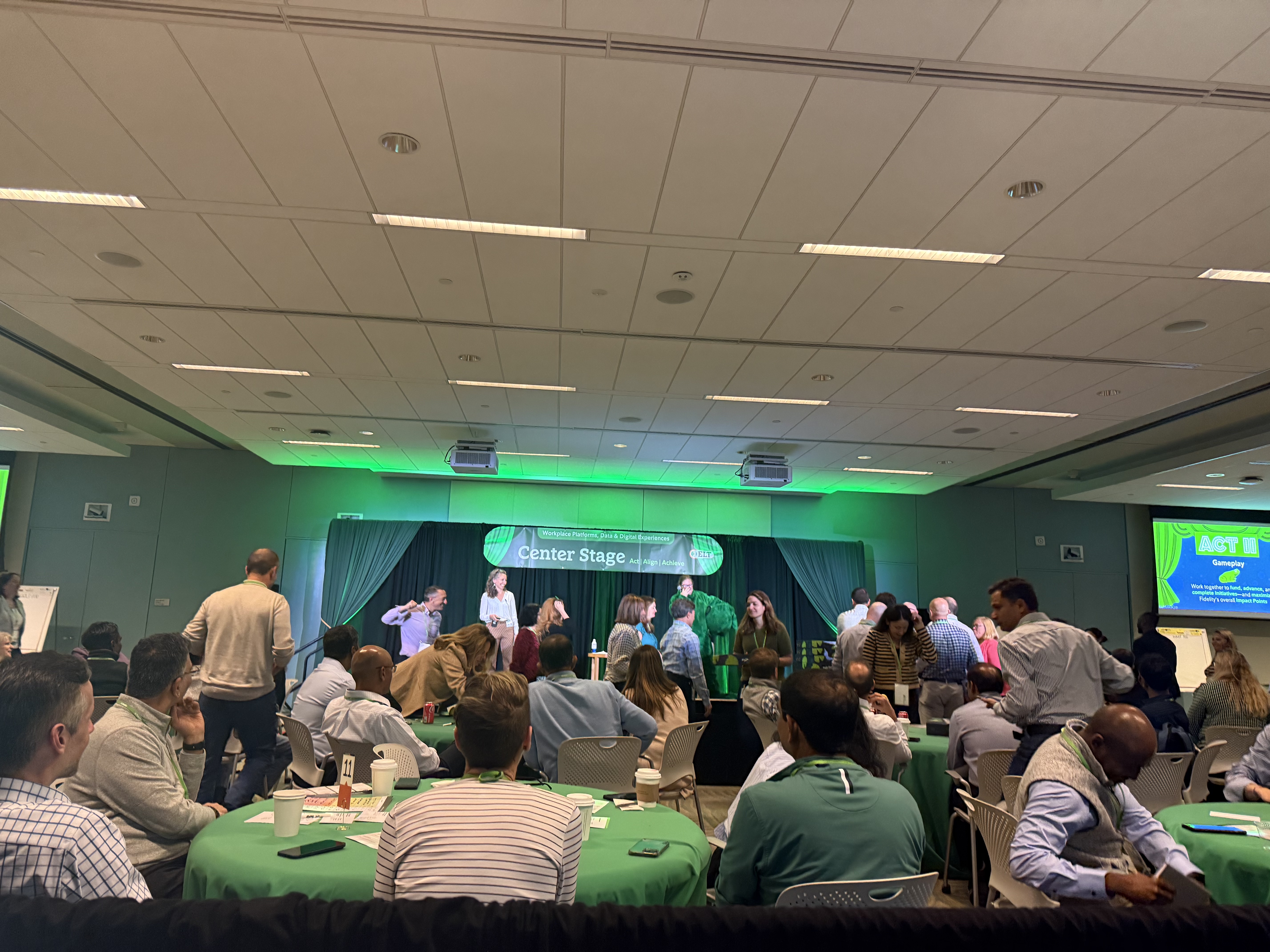
The summit in motion — 180 people playing together
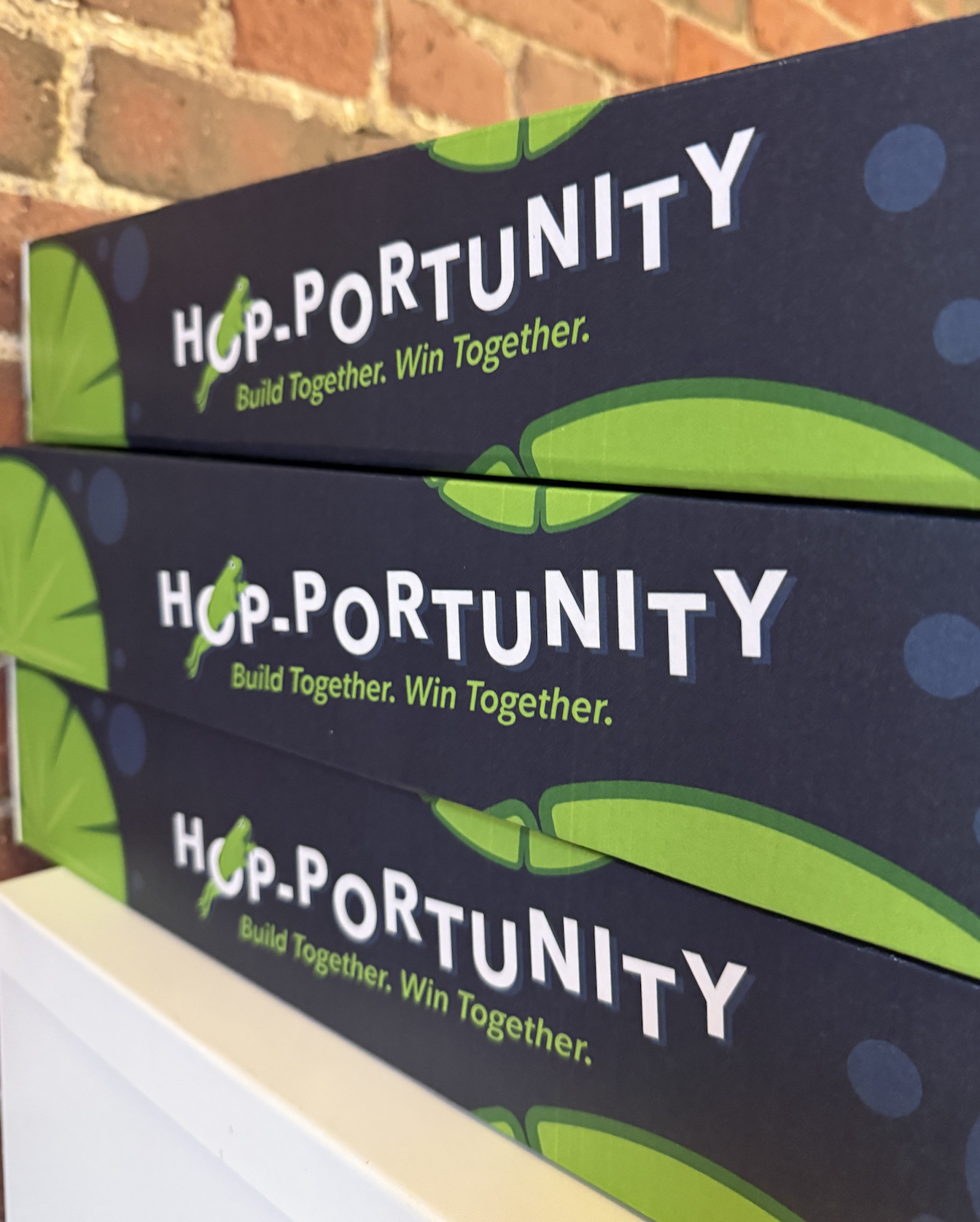
Final boxed game pieces
The Outcome
The event was a success by every measure: engagement, energy, and execution. But the most meaningful outcome came after the room cleared.
"I want to make real life initiative cards."
That's the whole point of experience design. Not just a good day, but a behavior that stuck. The game did what a PowerPoint never could — it made the content personal, competitive, and memorable.